

Psilocybin vs THC: Effects and Leveling
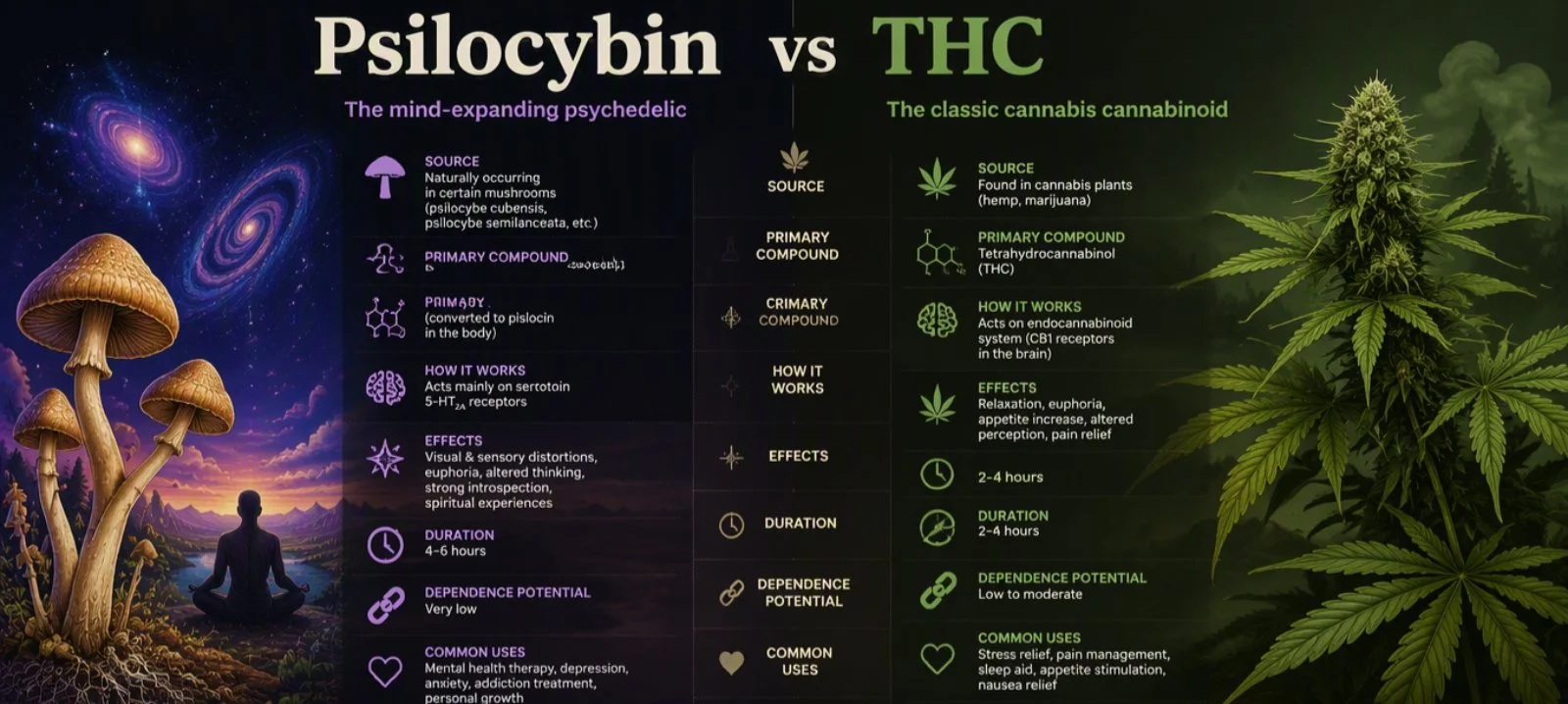
Psilocybin vs THC: Effects and Leveling
Understanding the differences between psilocybin and THC helps clarify two distinct experiences that are often discussed together, yet operate through very different mechanisms.
Psilocybin
Psilocybin is the primary active compound found in certain mushrooms. Once processed by the body, it interacts mainly with serotonin receptors, particularly the 5-HT2A receptor. This interaction produces a classic psychedelic experience.
Typical effects include:
Altered visual and sensory perception
Changes in thought patterns and sense of self
Heightened emotional sensitivity
A sense of expanded awareness or interconnectedness
The experience tends to unfold in waves. Effects usually begin within 20–60 minutes, reach a peak around the 1.5–3 hour mark, and gradually subside over 4–6 hours. Intensity is highly dose-dependent and can range from mild perceptual shifts to profound, immersive states.
THC
THC (tetrahydrocannabinol) is the main psychoactive compound in cannabis. It primarily binds to CB1 receptors in the endocannabinoid system.
Common effects include:
Euphoria and elevated mood
Physical relaxation
Mild changes in perception and time sense
Increased appetite
Occasional anxiety or racing thoughts at higher doses
The onset and duration depend on the method of consumption, but the overall experience is generally shorter and more grounded than a full psilocybin journey. Intensity also scales with dose, though the ceiling effect is usually lower than that of classic psychedelics.
Key Differences in Effect and Leveling
AspectPsilocybinTHCPrimary systemSerotonin (5-HT2A)Endocannabinoid (CB1)Core experiencePerceptual & cognitive expansionMood elevation & bodily relaxationVisual effectsOften prominentMild or absentEmotional depthFrequently intense and expansiveMore surface-levelDuration4–6 hours2–4 hours (inhaled) / longer (edibles)Intensity curveBuilds steadily, peaks stronglyRises more quickly, plateaus earlierAfter-effectsOften reflective or integrativeSedating or residual calm
Leveling refers to how the intensity of each substance scales with dose. Psilocybin has a steeper dose-response curve: small increases can significantly deepen the experience. THC tends to level off earlier for many people — higher doses increase intensity, but the qualitative shift is usually less dramatic than with psilocybin.
Important Considerations
Both substances affect individuals differently based on set, setting, personal sensitivity, and tolerance. What feels mild for one person may feel overwhelming for another. Neither compound is inherently “stronger” in absolute terms; they simply produce different categories of experience.
Psilocybin is more likely to produce lasting shifts in perspective for some users, while THC is more commonly associated with short-term mood and physical effects.
Closing Thoughts
Psilocybin and THC offer two distinct pathways of altered consciousness. One tends toward expansive, introspective, and perceptual change. The other leans toward relaxation, elevated mood, and milder sensory shifts. Understanding these differences allows for more informed choices based on the type of experience one is seeking.
As always, approach either substance with respect, awareness, and responsibility.
